
Correct Anilox Specification
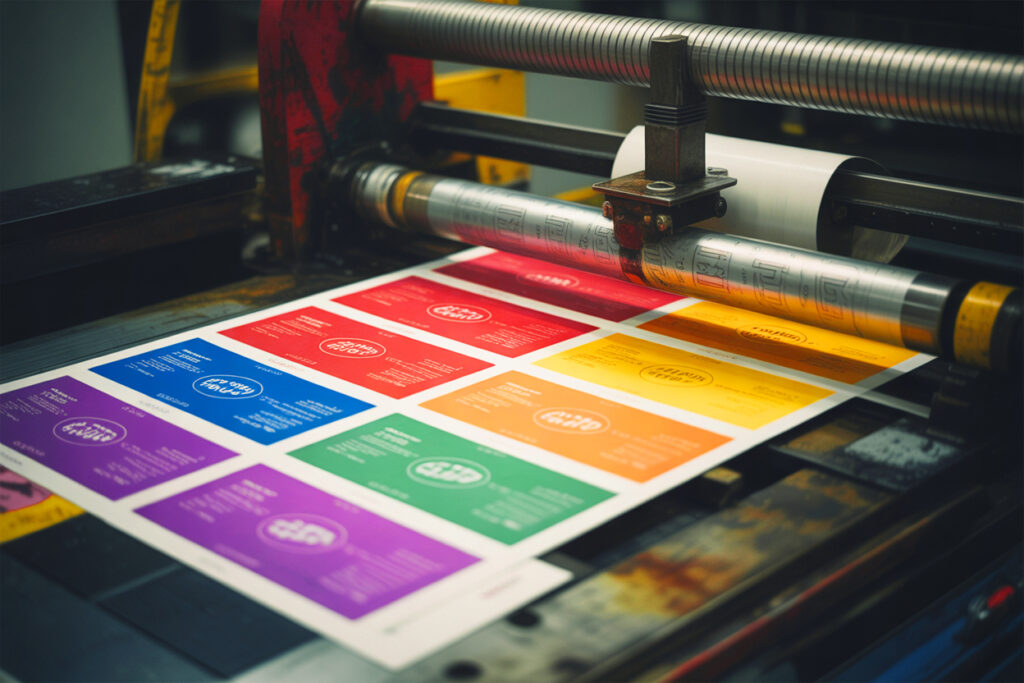
Do you know how to correctly specify an anilox?
Proper anilox specification is essential, although it is not the only factor in achieving the desired flexographic printing results. Below, we present the methodology for correct specification, highlighting the minimum parameters that may be adjusted according to specific needs or successful historical data.
Required Characteristics for Definition
An anilox specification is primarily defined by its surface, since its dimensional geometry is similar to other rolls. Therefore, two main groups of characteristics must be considered:
- Screen ruling, cell profile, and engraving angle;
- Volumetric capacity (BCM).
Variables Related to the Expected Result:
| Characteristic | Variable |
| Anilox screen ruling | Artwork/job – Plate screen ruling and dot percentage |
| BCM | Application intensity and substrate |
| Profile | Application and/or availability |
| Engraving angle | Application and/or availability |
Anilox Screen Ruling and Engraving Angle
Screen ruling refers to the number of cells per unit length, measured along the body of the anilox, expressed as lines per centimeter (L/cm) or lines per inch (LPI).
The engraving angle is the angle formed between the axial axis of the part and the engraved line.
The most common angles are 60°, 70°, and 75°.
Volumetric Capacity
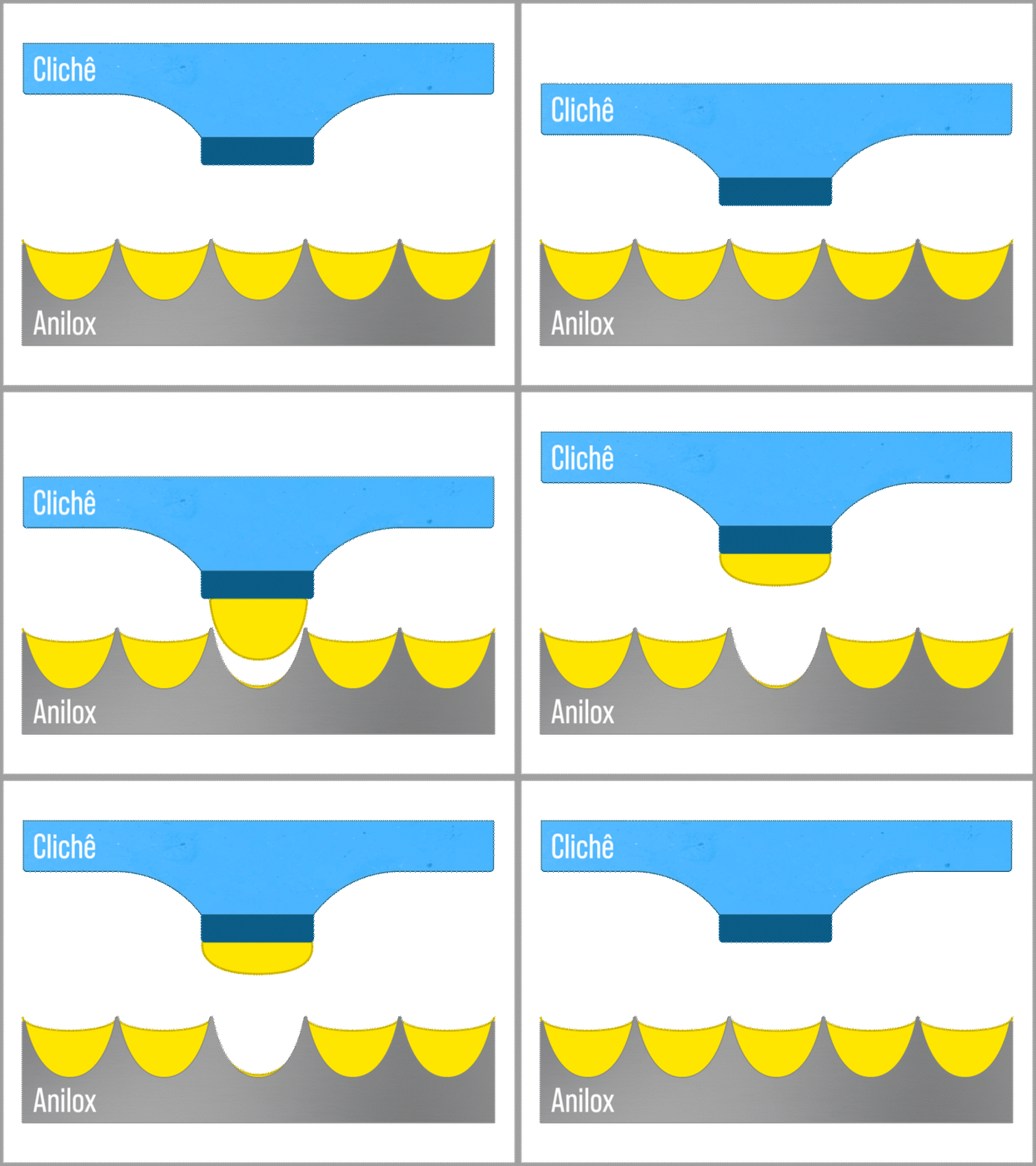
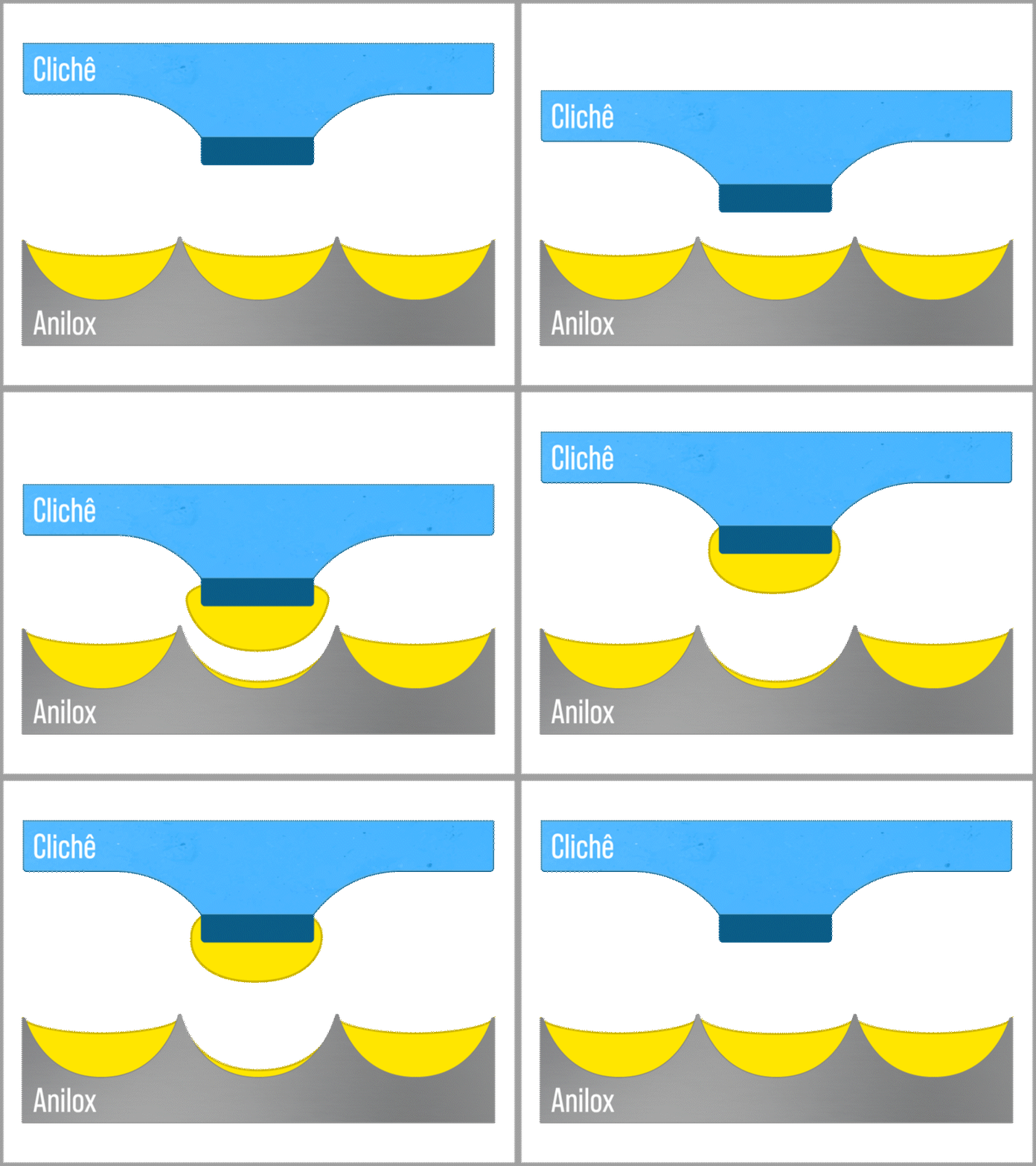
Volumetric capacity is the volume of ink contained within the engraved cells of the anilox roll that will be transferred to the printing plate.
- BCM (billion cubic microns per square inch);
- cm³/m² (cubic centimeters per square meter).
Plate Screen Ruling
Plate screen ruling is the number of dots per unit length measured along the engraving angle line, expressed in L/cm or LPI, similar to the anilox. The engraving angle varies depending on the color used.
If all halftone dots overlapped at the same angle, the result would be black. To prevent this, each screen is rotated approximately 30° relative to the others, except yellow, which is typically set at 15°.
Incorrect screen angles create an interference pattern known as moiré. Proper angle configuration is called a rosette.
Plate Dot Percentage
This percentage represents dot size relative to screen ruling, expressed from 0% (white area) to 100% (solid area).
Common dot shapes include:
- Round;
- Square;
- Elliptical;
- Geometric (lines).
The relationship between anilox screen ruling and plate screen ruling determines whether dot flooding may occur. Lower dot percentages increase the tendency for this effect, resulting in dot gain.
Volumetric Capacity Definition
The volumetric capacity of a laser-engraved roll can range between minimum and maximum values. BCM selection depends on the job:
| Low BCM & high screen ruling | Used in process printing and fine details; less dot gain. |
| Medium BCM | Used in gradients and mixed applications. |
| High BCM | Used for solids, varnish, and white ink requiring strong coverage. |
Cell Opening to Depth Ratio
Recommended working range: 28% to 33%.
Above 33%:
- Deep cells;
- Greater ink release difficulty;
- Harder cleaning.
With modern elongated cell technology, depth is reduced, improving ink transfer and maintaining cleanliness.
With Laserflex exclusive Cobracell® CBC70 and CBC75 technology, you can achieve:
- Improved graphic definition;
- Reduced plate contamination;
- Reduced machine setup time;
- Easier cleaning;
- High screen rulings with high volumes;
- Optimized ink consumption;
- High ink transfer rate;
- Printing solids and halftones with the same plate.